
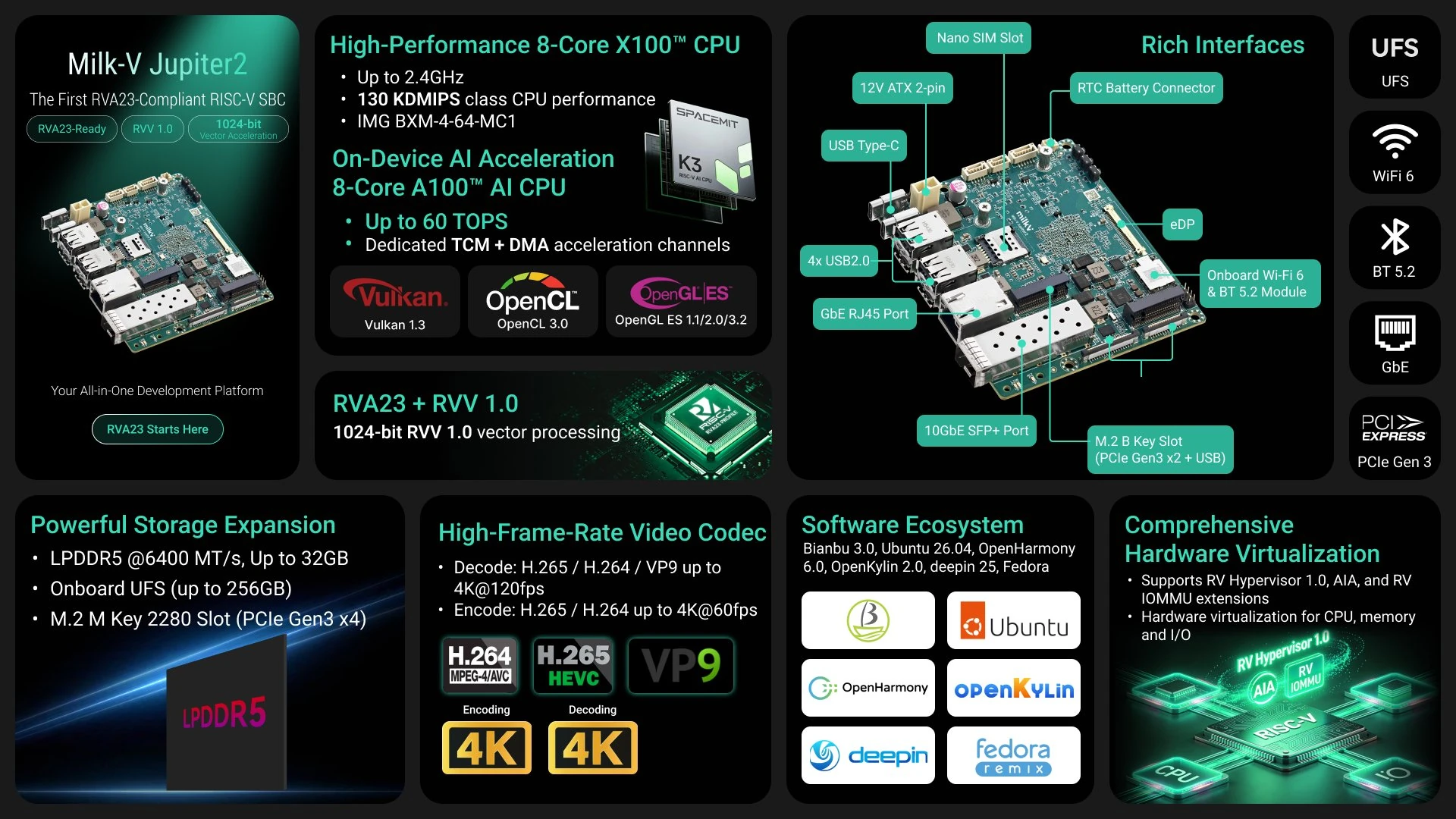
MILK-V Shenzhen Technology has just unveiled the Jupiter 2, the first RVA23-compliant RISC-V SBC powered by a 2.4 GHz SpacemiT K3 octa-core X100 CPU with up to 60 TOPS of AI performance, up to 32GB LPDDR5, 256GB UFS, and PCIe Gen3 x4 NVMe SSD support.
Designed by SpacemiT themselves, the board also features an eDP connector, a 10GbE SFP+ cage, a Gigabit Ethernet RJ45 port, built-in WiFi 6 and Bluetooth 5.2 wireless connectivity, two USB Type-C connectors, four USB 2.0 ports, an M.2 Key-B socket coupled with a NanoSIM card slot for 4G LTE or 5G cellular connectivity, and more.
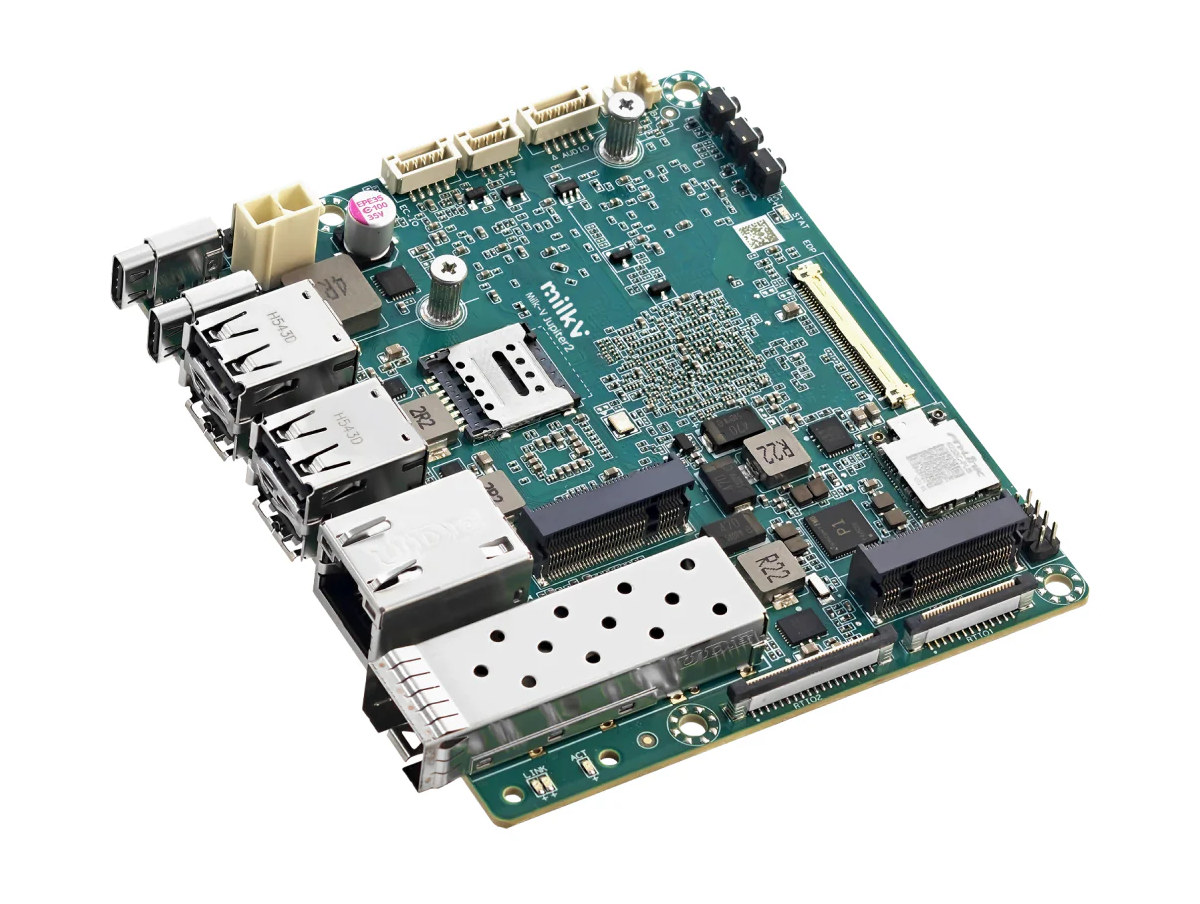
Jupiter 2 specifications (preliminary):
- System-on-Module – K3-CoM260 (aka Jupiter 2 NX)
- SoC – SpacemiT K3
- CPU
- 8x 64-bit RISC-V X100 “big” cores clocked up to 2.4 GHz, RVA23 compliance; 130 KDMIPS performance (similar to RK3588)
- 8x RISC-V A100 AI Cores with support for up to 1024-bit RVV1.0 parallel computing, optimized for matrix operations.
- GPU – Imagination Technologies BXM4-64-MC1 GPU with Vulkan 1.3, OpenCL 3.0, and OpenGL ES 1.1/2.0/3.2 support
- VPU
- Video decoder – H.265, H.264, VP9 up to 4K @ 120 FPS
- Video encoder – H.265, H.264 up to 4K @ 60 FPS
- AI – Up to 60 TOPS (INT4) of AI performance using dedicated TCM and DMA acceleration channels;
- CPU
- System Memory – Up to 32GB LPDDR5 @ 6400 MT/s (51GB/s bandwidth)
- Storage
- Up to 256GB UFS storage
- SPI NOR flash
- MicroSD card slot (yes, on the module)
- Host interface – 260-pin SO-DIMM edge connector
- SoC – SpacemiT K3
- Storage – M.2 Key-M 2280 (PCIe Gen3 x4) socket for NVMe SSD
- Display Interface
- eDP connector
- 1x USB-C port with DP 1.2
- Audio – Audio connector
- Networking
- 10GbE SFP+ cage via RealTek RTL8127 controller
- Gigabit Ethernet RJ45 port via RealTek RTL8211 controller
- WiFi 6 and Bluetooth 5.2 module with two IPEX antenna connectors
- Optional 4G LTE/5G cellular via M.2 Key-B socket
- USB
- 2x USB-C ports
- 1x USB 3.2 port with DP 1.2 Alt. mode and USB PD
- 1x USB 3.2 OTG port
- 4x USB 2.0 Type-A ports
- 2x USB-C ports
- Expansion
- M.2 M-Key 2280 (PCIe Gen3 x4) socket
- M.2 B-Key 2242/3052 (PCIe x2 + USB 2.0) socket
- 2x “RTI” FPC connectors supporting EtherCAT, CAN-FD, and other interfaces for microsecond-level motion control and robotics
- EC-IO connector for the Embedded Controller managing fan, I2C, GPIO, button, and LED
- Misc
- 3x buttons
- RTC battery connector
- 4-pin SYS connector
- Power Supply up to 65W
- 12V DC up to 7A via 2-pin ATX connector
- USB PD via USB-C port
- Dimensions
- Board: 100 x 86 mm (Pico-ITX Plus form factor)
- With heatsink: 103 x 90.5 x 35mm
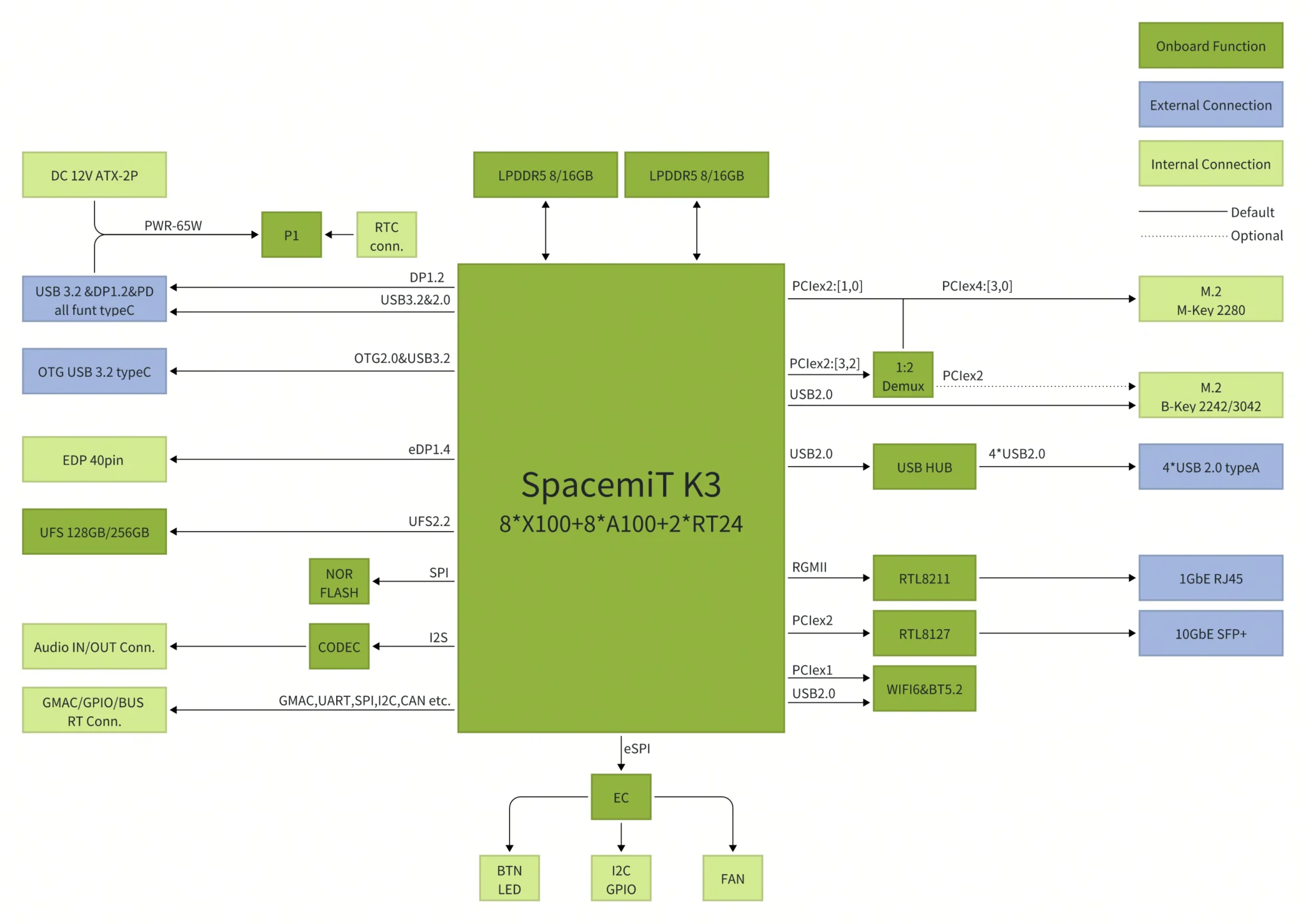
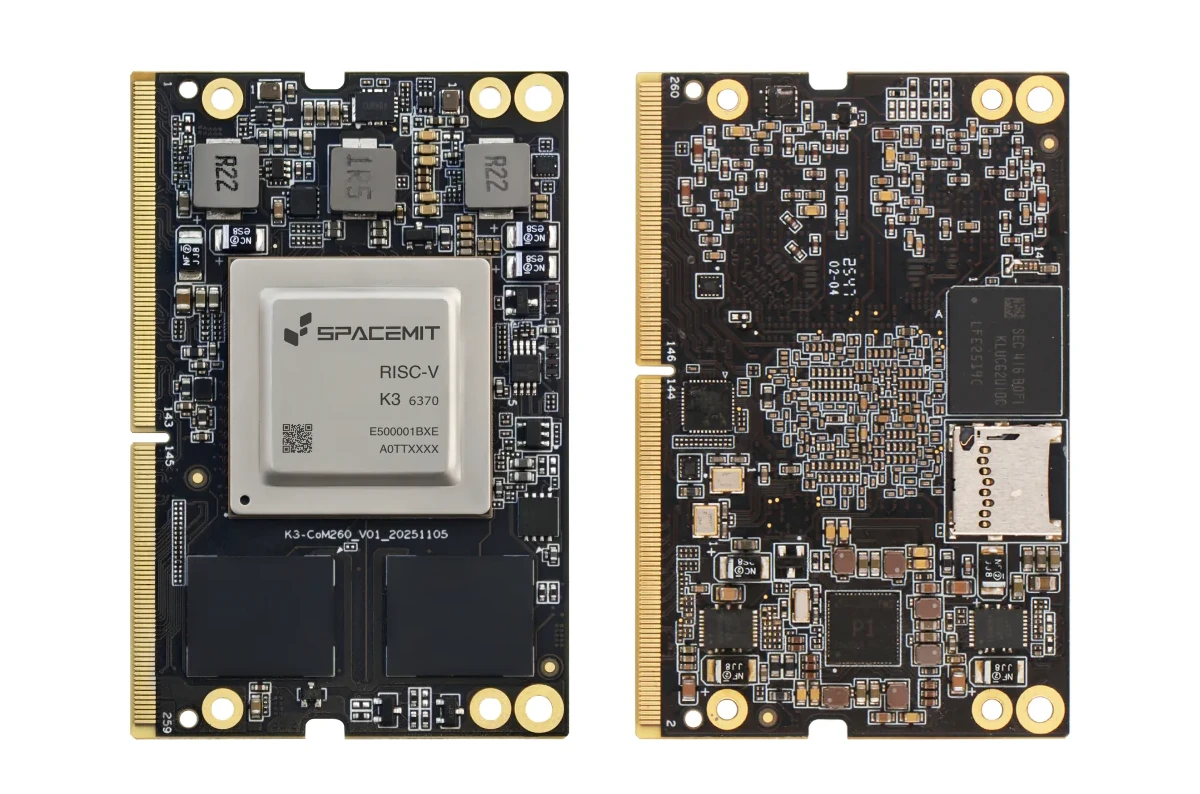
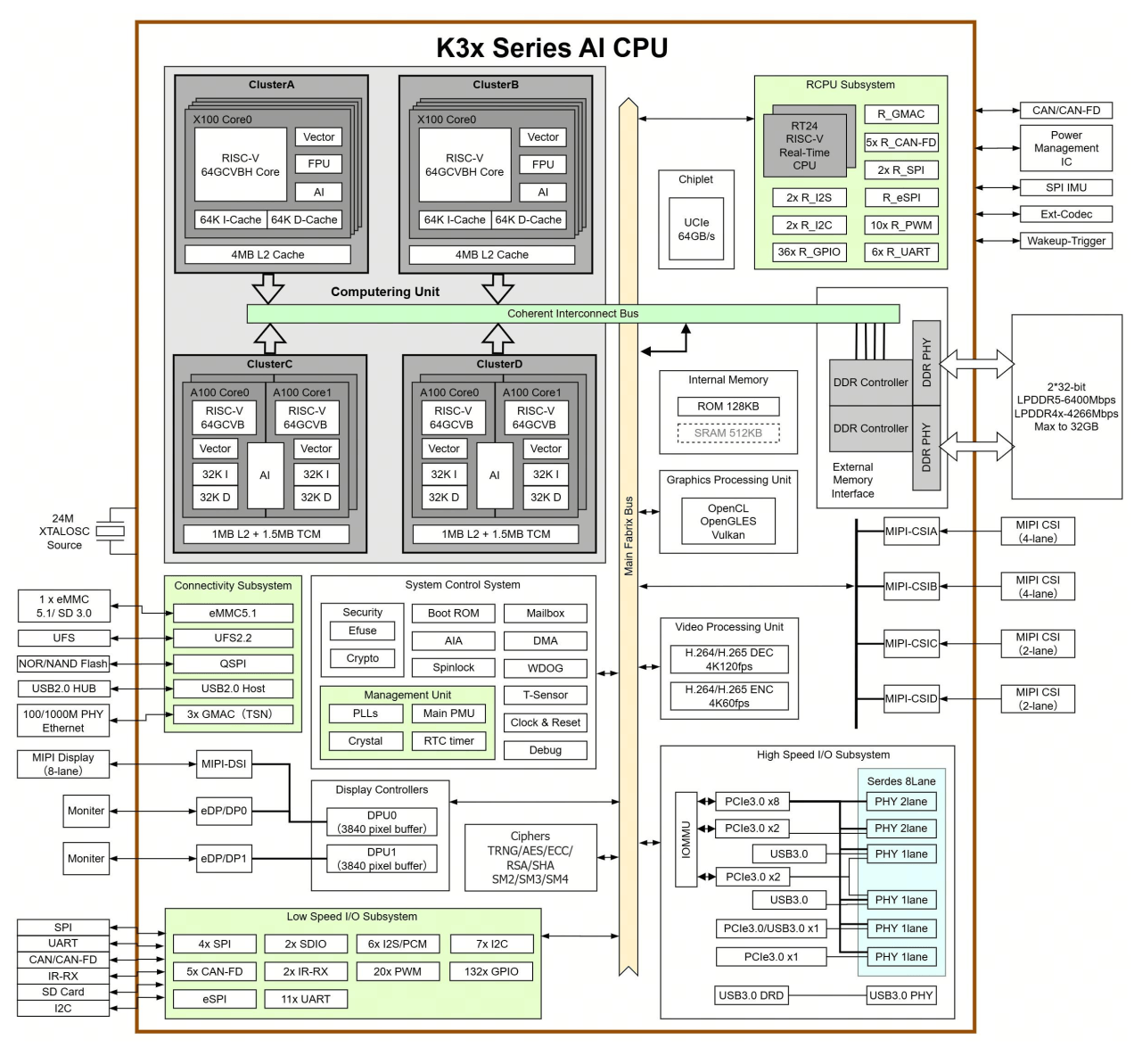
The specifications are still a work-in-progress since the company didn’t release the full details. I was initially surprised to find out the SpacemiT K3 is advertized as an octa-core processor, since tests on a remote K3 RISC-V platform showed 16 cores in Linux (Ubuntu 26.04), albeit with only eight cores usable [Update: That’s because there are eight X100 cores and eight A100 “AI” cores; the specs have been updated; check the comments and block diagram below for details].
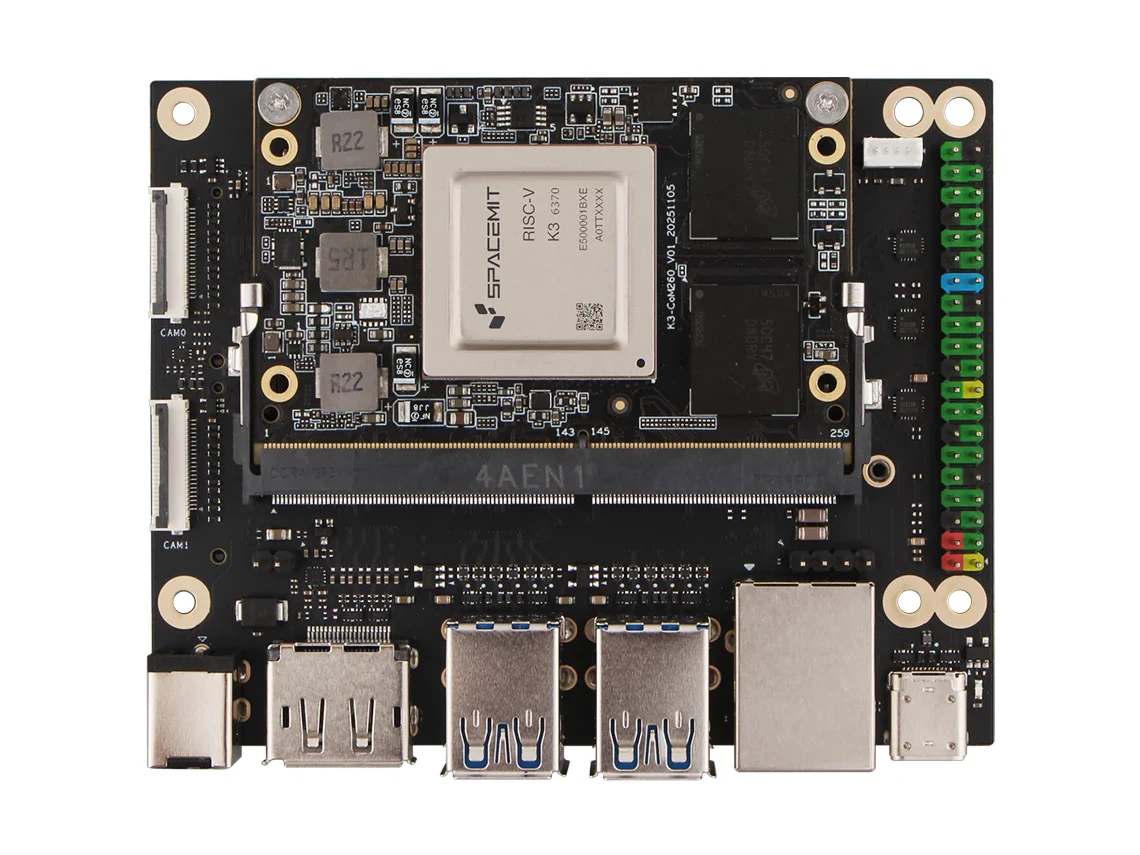
On the software front, the Jupiter 2 board will support Bianbu 3.0 OS, Ubuntu 26.04 (thanks to RVA23 compatibility), OpenHarmony 6.0, OpenKylin 2.0, Deepin 25, and Fedora. The company highlights support for RV Hypervisor 1.0, AIA, and RV IOMMU extensions, as well as hardware virtualization for CPU, memory, and I/Os. The system-on-module appears to be compatible with NVIDIA Jetson Orin Nano/NX carrier boards based on the photo below.
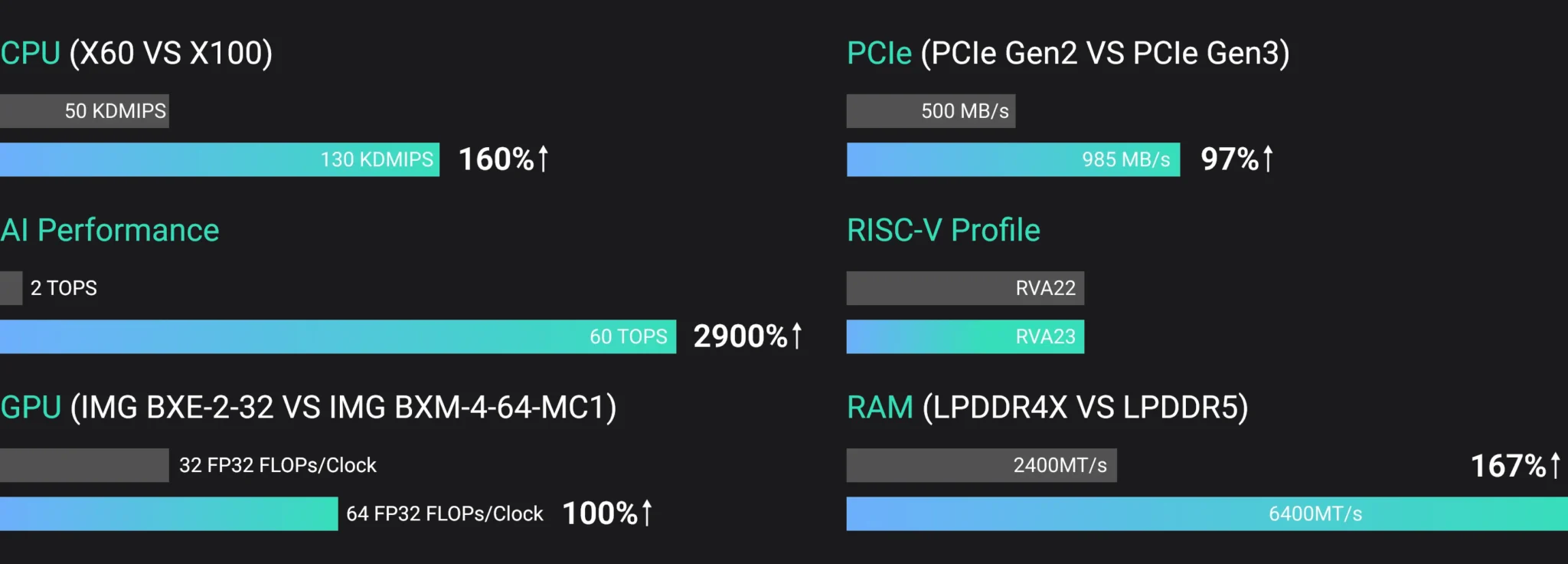
Early benchmarks for the SpacemiT K3 indicate Rockchip RK3588-level of multi-core performance, and results slightly lower than a Raspberry Pi 5 for single-core performance. What you get is much faster storage, networking, a proper video processing unit with 4K decoding and encoding, and a built-in 60 TOPS NPU. Bandwidth should also be significantly better, but early memset/memcpy results are only marginally better than those of a Raspberry Pi 5. Some data was also shared to show the performance delta between the SpacemiT K1 and K3 SoCs when using the Jupiter NX and Jupiter NX2 modules.
The Jupiter 2 RISC-V SBC is expected to ship in April 2026, and MILK-V has yet to provide price information, but they’ve already launched pre-orders on Arace, where users can spend $5 to get a $50 discount once the board becomes available. Everything is super confusing, as there appear to be three products. The SpacemiT K3 system-on-module, the Jupiter 2 SBC, and a Jupiter 2 NX development with the Radxa C200 carrier board and K3-CoM260 SoM. [Update: prices listed on Arace: $199 for the Jupiter 2, $199 for the Jupiter 2 NX, and $239 for the Jupiter 2 NX Devkit. See comments section, price may differ depending on your location]. Additional details may also be found on the product page and in the announcement on X.
Support CNX Software! Donate via cryptocurrencies, become a Patron on Patreon, or purchase goods on Amazon or Aliexpress. We also use affiliate links in articles to earn commissions if you make a purchase after clicking on those links.
Source: CNX Software
Author: Jean-Luc Aufranc (CNXSoft)