
Microchip has added the PIC32CM PL10 MCUs to its PIC32C Arm Cortex-M0+ microcontroller family. Pin-to-pin compatible with AVR MCUs, the new PL10 MCUs feature a range of Core Independent Peripherals (CIPs), 5V operation, and functional safety (FuSa) compliance.
The microcontrollers notably integrate a 12-bit ADC with strong noise immunity, a Peripheral Touch Controller (PTC) for responsive touch applications, and two serial communication interfaces with USART, I2C, and/or SPI support. Target applications include industrial control, building automation, consumer appliances, power tools, and sensor-based systems.
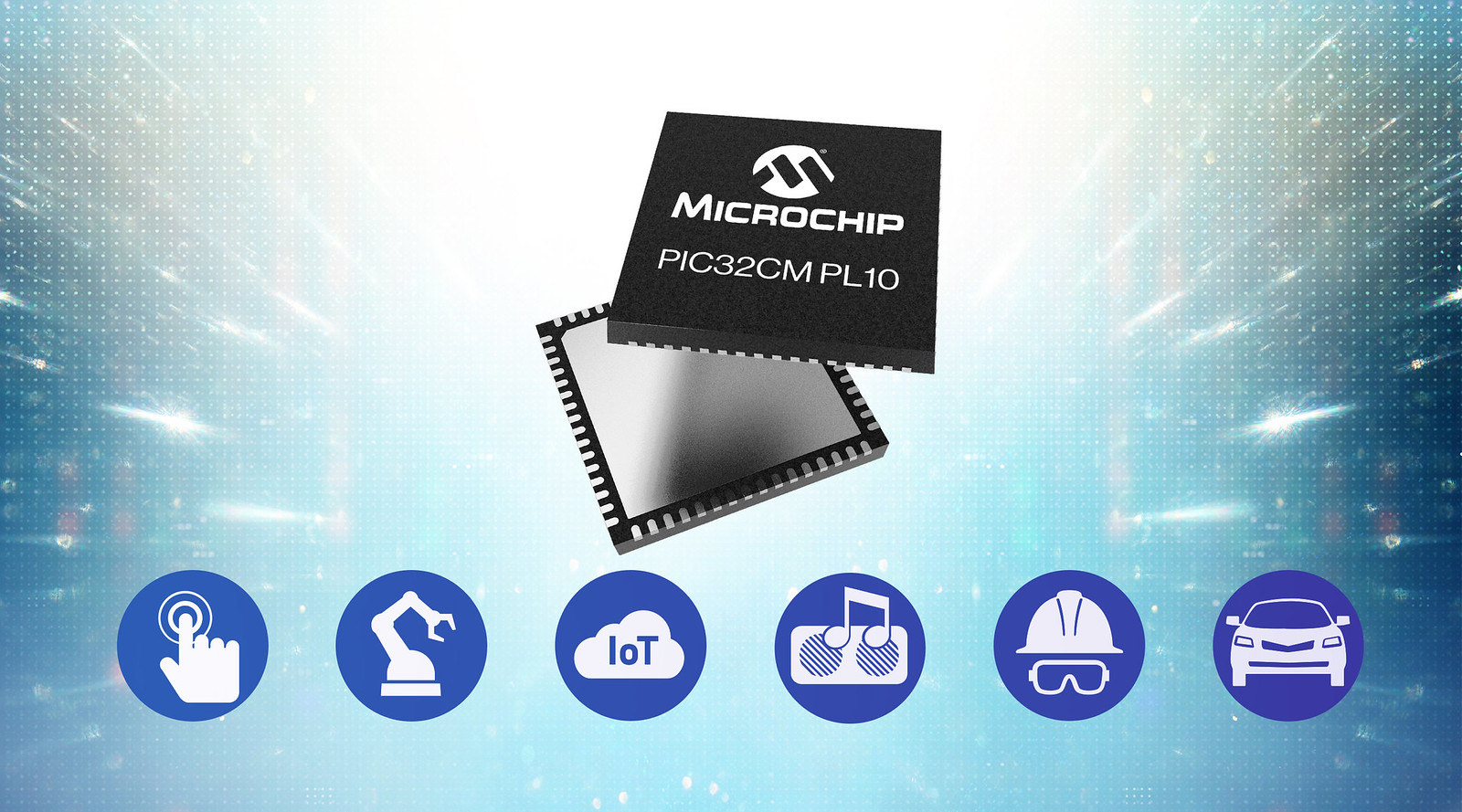
Microchip PIC32CM PL10 specifications:
MCU core – Arm Cortex-M0+ core up to 24 MHz
Memory – Up to 16 KB SRAM (8 KB in current datasheet)
Storage – Up to 128 KB Flash (64 KB in current datasheet)
I/Os and peripherals
Up to 55x programmable I/O pins
Up to 16x external interrupts
Multi-Voltage I/Os (MVIO), removing the need for external level shifters
Peripheral Touch Controller (PTC) with up to 29 self-capacitance channels
Two serial communication interfaces (SERCOM0/1)
SERCOM0: USART, SPI, and I2C
SERCOM1: USART, SPI
Two-channel Direct Memory Access Controller (DMAC)
Four-channel Event System (EVSYS ) to enable low-latency, low-power communication between peripherals without using the Arm core
Analog
12-bit differential and single-ended Analog-to-Digital Converter (ADC) up to 800 ksps
2x analog comparators
Timers
3x 16-bit basic Timer/Counters (TCs)
16-bit Timer/Counter for Control (TCC) with four Pulse-Width Modulation (PWM) channels
Watchdog Timer (WDT)
32-bit Real Time Counter (RTC) with clock/calendar function
Debugger Development Support
In-circuit and in-application programming
Two-Wire Serial Wire Debug Port Interface
Four hardware breakpoints and one data watchpoint
Micro Trace Buffer (MTB) for instruction trace in SRAM
Programming and Debugging Interface Disable (PDID) functionality
Misc – External crystal oscillator with failure detection
Supply Voltage – 1.8–5.5V
Packages
28-pin VQFN with Wettable Flanks (WF), SSOP, and SPDIP (breadboard-compatible)
32-pin TQFP and VQFN WF
48-pin TQFP and VQFN WF
64-pin TQFP and VQFN WF
Temperature Range
Industrial: −40°C to 85°C
Extended: −40°C to 125°C (AEC-Q100 Grade 1)
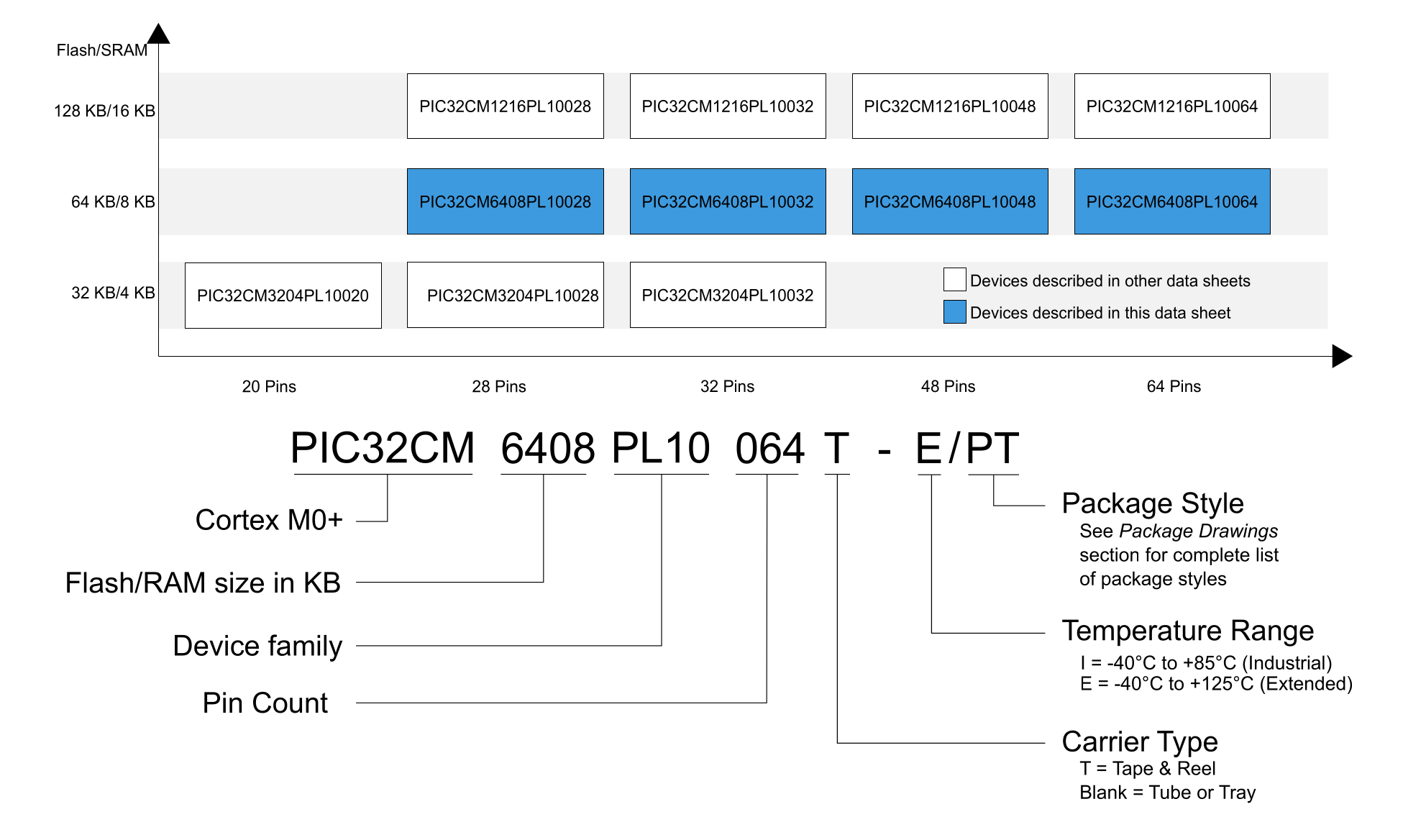
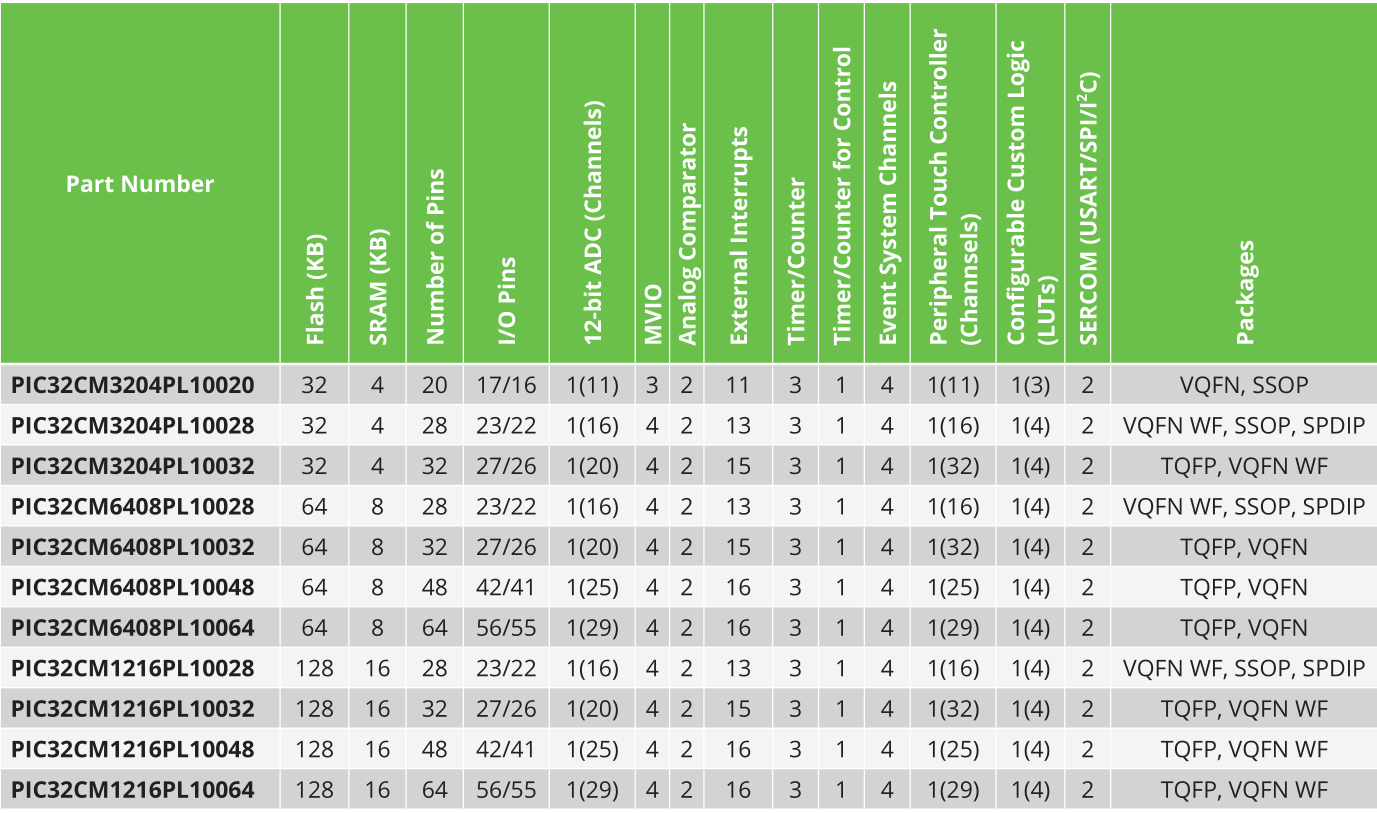
The PL10 family is supported by Microchip’s MPLAB X IDE, as well as third-party tools such as Microsoft Visual Studio Code (VS Code), IAR Systems Workbench for Arm, Arm Keil, SEGGER debuggers, Zephyr RTOS, and more. Microchip also mentions the MPLAB AI Coding Assistant for code generation and real-time insights to accelerate and simplify development.
The PIC32CM-PL10 Curiosity Nano Evaluation Kit (EV10P22A) enables rapid prototyping and evaluation of the new PIC32M PL10 family. It’s based on the PIC32CM6408PL10048 device (64KB flash, 8KB SRAM, 48-pin package), and features an on-board Nano Debugger for programming and debugging, a USB-C port for power and data, a user LED, a touch button, and a mechanical user switch. It exposes I/Os through breadboard-compatible Curiosity Nano edge connectors and castellated edges for surface mounting.
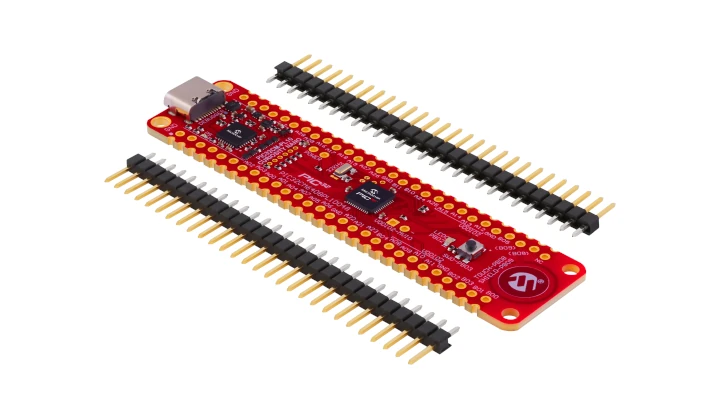
The PIC32CM PL10 MCUs can be purchased directly from Microchip or through authorized distributors. It could not find any SKU on Microchip Direct, but the PIC32CM PL10 Curiosity Nano Evaluation Kit is offered for $9.99. More details can be found on the product page, the press release, and the online documentation for the board.
Source: CNX Software
Author: Jean-Luc Aufranc (CNXSoft)